Muse Dash
- 4.5
- Rating
- 1.00M
- Installs
- $2.99
- Price

 Analysis by App-foxy
I expected a music game to test whether I could follow a beat, but Muse Dash quickly showed me that its appeal comes from combining rhythm with constant movement. I am not simply tapping along to songs while a background animation plays. I am guiding a character through a bright side-scrolling stage, reacting to enemies and obstacles as the music pushes the action forward. That combination makes each attempt feel active from the first second, and it also explains why a short session can easily turn into another one.
This is a paid game from hasuhasu, listed in the Music category for Android. It costs $0.49, carries a Teen age rating, and also includes optional in-app purchases ranging from $0.99 to $33.99 per item. The game was released on Jun 15, 2018, and the current version is 6.0.1, with Android 7.0 or later required. Those details matter because this is not quite the same proposition as a simple free rhythm toy: there is a small entry cost, but the game is built around replaying songs and improving performance rather than finishing one brief novelty.
Why the first action feels so immediate
The opening interaction is easy to understand. Notes and threats approach from the side, and I use the available controls to hit, avoid, or respond to them in time with the track. The important part is that the game does not make me wait through a long explanation before I can play. I learn by watching the lane, listening to the song, and noticing what happens when my timing is right or late.
You May Also Like

 Blood Strike: 2.5 Anniversary
Blood Strike’s Loadouts Turn Every Drop Into a Tactical Gamble
A close look at Blood Strike’s custom loadouts: how fast access to signature weapons reshapes its battle royale rhythm, rewards preparation, and narrows the gap between fights.

 Pandora - Music & Podcasts
Pandora’s Music Is Easy to Start, but Harder to Recover
Pandora’s strength is its low-effort path from a seed to a station. Its weak spot is how much confidence it asks you to place in connection, setup, and quiet recovery.

 8 Ball Pool
 Is Built on Rivalries, Rematches, and Routine
A close look at the rivalries, rematches, shared routines, and unanswered safety questions that turn a quick pool match into a persistent mobile community.

 Samsung Music
’s Quiet Strength Is Playing What You Already Own
Its reach comes less from spectacle than from dependable access to a personal library. That simplicity is both the app’s strongest retention engine and its ceiling.

 AccuWeather: Weather Radar
AccuWeather Review: A Quick, Clear Forecast for Everyday Decisions
For everyday plans, the best forecast is the one you can understand quickly. AccuWeather makes rain timing, radar, and local conditions easy to act on, with a few trade-offs.

 Hill Climb Racing
Why Hill Climb Racing Still Turns Crashes Into One More Run
A tiny car, a bumpy hill and one more upgrade: Hill Climb Racing keeps resurfacing because its simple chaos makes every near-miss feel personal.
More From Our News Desk
View All News


That first action creates a useful division of attention. My eyes follow the incoming pattern, while my ears help me anticipate the next beat. At the same time, the character keeps moving, so I cannot treat the stage as a static sequence of prompts. The music gives the level its pulse, but the visual threats give that pulse a practical purpose. I am not tapping because a marker appeared in isolation; I am tapping because the character is about to meet something in the path.
I found this especially approachable when I was still learning the timing. A missed input is immediately understandable. Either I reacted too early, too late, or failed to notice the next target. That clarity is valuable in a rhythm game, because vague feedback makes improvement feel like guesswork. Here, the relationship between what I saw, what I heard, and what happened on screen was direct enough for me to adjust during the next attempt.
The controls also make the game suitable for quick play on a phone. I do not need a large screen or a controller to understand the basic interaction, although a smaller display can make crowded moments harder to read. My practical advice is to begin with the phone held securely and the sound turned on. Playing silently removes one of the best timing references, while an unstable grip can turn a correct reaction into an accidental miss.
One detail I appreciated is that the first few attempts are useful even when they are unsuccessful. A failed run is not merely a loss; it shows me where the song changes pace, where a visual pattern becomes denser, and which moments deserve more attention. That makes the opening action feel like practice rather than a barrier. I can enter a stage without knowing its layout and still come away with information for the next try.
The rhythm is carried by more than the soundtrack
The feedback loop becomes stronger once I stop treating the music and the action as separate layers. Successful inputs produce a satisfying sense of alignment: the character responds, the obstacle is handled, and the song continues without breaking my concentration. When I miss, the interruption is equally useful because it exposes the exact weakness in my timing. I can hear the track, see the lane, and feel the consequence almost at once.
This is where the game differs from a conventional music player or a passive music-themed runner. In those alternatives, the song is usually the destination or the atmosphere. Here, the song is also a timing map. I am encouraged to listen for repeated phrases and changes in intensity, then connect them to the visual sequence. A player who relies only on sight may survive familiar patterns, but listening becomes increasingly helpful when the screen gets busy.
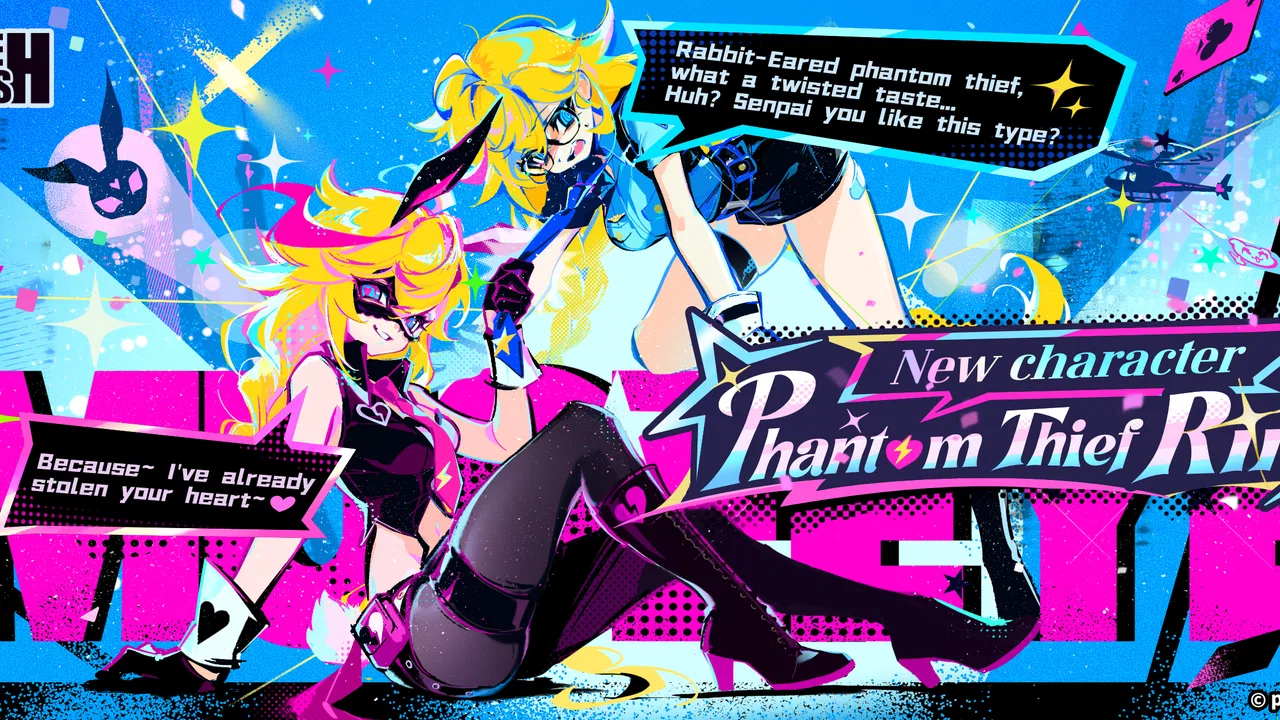
The visual presentation supports that feedback without trying to look restrained. The characters, enemies, and backgrounds use a colorful anime-inspired style, and the action has a playful energy rather than a serious arcade mood. I think that tone will be a major part of the appeal for players who enjoy expressive character art and energetic presentation. It may be less attractive to someone looking for a minimalist rhythm interface with almost no visual distraction.
There is a trade-off here. The lively presentation gives every stage personality, but it can also compete for attention when several things happen at once. I learned not to stare at the character animation or background effects during difficult passages. The useful visual information is usually in the incoming lane, so keeping my eyes there made a bigger difference than trying to admire every movement during a demanding section.
Another practical tip is to separate recognition from reaction. On a first run, I often waited until an object was very close before responding, which left little room for correction. After learning a section, I began reading the shape of the upcoming pattern earlier and preparing my fingers before the decisive moment. That small change made the game feel less frantic. It also turned replaying a song into a genuine skill exercise rather than a repeated test of reflexes.
For players who are sensitive to timing differences between touch and sound, the phone itself can affect the experience. Wireless audio may introduce delay on some devices, so wired audio or the phone speaker can be preferable if the beat feels noticeably out of sync. I would not blame the game immediately if the timing seems wrong; first I would test the same stage with another audio setup and make sure background apps are not affecting performance.
Rewards that make improvement feel concrete
The reward is not only reaching the end of a stage. I also get the satisfaction of cleaning up mistakes, surviving a section that previously stopped me, and seeing a familiar song become easier through practice. That is an important distinction. The game does not need every session to deliver a new unlock or a dramatic surprise, because the main reward is improved control over a sequence I once found difficult.
That structure suits players who like measurable personal progress. I can replay a track with a specific goal: avoid one recurring mistake, maintain a longer successful run, or handle a difficult transition without panicking. These small objectives are more useful than simply choosing “play again” without a plan. My best sessions usually began with one narrow target instead of an unrealistic attempt to perfect everything at once.
The character-driven presentation adds another layer to the reward. The cast and stage style give the action a sense of identity, so I am not just clearing anonymous timing charts. Even when the underlying interaction is familiar, the combination of music, movement, and character animation makes success feel more lively. This helps explain the game’s broad audience: it can appeal both to rhythm-game fans and to players drawn in by colorful action presentation.
Still, I would not describe the reward system as universally motivating. If you need a strong story, a large exploration map, or a long campaign with constant narrative progress, this is not the right kind of payoff. Its satisfaction comes from execution and replay. Players who dislike repeating the same song after a mistake may feel that the game asks them to work for rewards that are mostly personal improvement.
The purchase model is worth considering before committing. The initial price is low, but optional purchases can add to the total cost if I start buying items regularly. I would approach it as a compact paid rhythm game first, then decide whether the extra purchases fit my budget and interest. The low entry price makes trying the core experience easy, but it should not be mistaken for a promise that every possible addition is included in that first payment.
With an average rating of 4.5 from around 64 thousand ratings, the game has clearly found an audience, and its install count has passed one million. I see those figures as signs of sustained interest rather than proof that every player will enjoy it. The same fast timing, colorful style, and replay-focused structure that attract one person may frustrate another, especially if that person prefers slower games or more forgiving controls.
Why a failed run invites a reset
The reset is one of the most important parts of the design. When a run ends, I am usually aware of the reason: a missed sequence, a poorly judged reaction, or a section I have not memorized yet. Because the cause is visible, restarting feels reasonable. I am not beginning from zero in terms of knowledge. I am carrying a better understanding of the song into the next attempt.
This creates a compact action-feedback-reward-reset loop. I act on the incoming pattern, receive immediate confirmation or correction, earn the satisfaction of surviving and improving, then restart with a clearer plan. The loop works because the reset is not emotionally empty. I can identify one thing to change, and the next attempt begins before the previous mistake has become a distant memory.
In everyday use, I found the game well suited to a short break. Imagine waiting for a friend at a café or taking a few minutes after finishing a chore. I can play one stage, notice that a particular passage is giving me trouble, and use a second attempt to focus only on that passage. The session has a natural stopping point because a run ends, but it also has a natural continuation because the next attempt promises a chance to correct something specific.
That convenience has a downside for time management. The “one more try” feeling is strong, especially when I fail near the end of a song. If I need a game that helps me switch off immediately, a slower puzzle or an offline reading app may be a better choice. This one keeps my attention active, and its short sessions can expand when I am close to overcoming a difficult sequence.
I also think the reset works best when I accept that not every attempt should be perfect. Trying to force a flawless run too early can make the game feel harsher than it is. A better workflow is to learn the opening, identify the first troublesome section, and then build consistency before chasing a clean result. That approach reduces frustration and gives each restart a clear purpose.
The Teen content rating is another reason parents and younger players should consider the intended audience before downloading. The game’s presentation is playful and stylized, but the rating still places it above a universally child-focused experience. I would treat that rating as a reminder to check whether the tone and purchase options suit the person using the device, especially when the game is installed on a shared phone or tablet.
Who should choose it, and who should skip it
I would recommend this game to someone who enjoys music games but wants more physical energy than a simple tap chart provides. It is a good fit for players who like replaying short challenges, learning patterns through repetition, and improving timing one mistake at a time. It is also a strong choice for fans of colorful character-driven presentation who want the soundtrack to influence the action rather than merely accompany it.
I would be more cautious recommending it to a player with limited patience for retries. The game’s central pleasure depends on repeating a stage until the pattern becomes familiar. If the idea of revisiting a failed song sounds tedious, the bright art may not be enough to carry the experience. Likewise, someone seeking a calm listening session should choose a music app instead, because this game asks for continuous attention and quick decisions.
Compared with a standard rhythm game, this offers more movement and immediate danger. Compared with a typical endless runner, it gives the soundtrack a much more important role in deciding when to act. That middle ground is its clearest identity. It is not trying to replace a full music library, and it is not simply an action game with songs in the background. The appeal comes from making those two systems depend on each other.
My main limitation is that the presentation can become visually demanding, and the replay structure may feel narrow if I am not in the mood to practice. I also would not choose it as my first recommendation for someone who needs extensive accessibility options or prefers slow, forgiving input. The game rewards attention and timing; it does not hide the consequences of a lapse in concentration.
On the other hand, that directness is exactly why the game remains compelling. I always know what I am trying to improve, and a successful response has an immediate effect on the run. The current version, 6.0.1, gives Android players a modern point of entry on devices running Android 7.0 or newer, while the long-running release history and large player base suggest that this is more than a disposable rhythm experiment.
My verdict on the complete loop
After playing it, I see the strongest reason to return in the way the game transforms failure into a practical lesson. The first action is simple, the rhythm feedback is quick, the reward is tied to better execution, and the reset comes with useful knowledge. That sequence keeps the game moving without requiring a complicated explanation of why another attempt matters.
The best part of Muse Dash is the tight connection between what I hear, what I see, and what my fingers do next. When those elements line up, a stage feels almost like a short performance: the character moves through danger, the music supplies the momentum, and my inputs determine whether the flow continues. When they do not line up, the game gives me enough information to try again with a better idea.
I would recommend buying it if you want an energetic rhythm game for brief but repeatable sessions and you are comfortable with a small upfront price plus optional purchases. I would skip it if you want a relaxed soundtrack player, a story-heavy adventure, or a game that constantly replaces repetition with new content. For the right player, however, the loop is convincing: react, improve, reset, and immediately feel tempted to see whether the next run can finally stay in rhythm.
FAQs for Muse Dash
01What is Muse Dash, and how does it stand out from other rhythm games?
Muse Dash is a unique rhythm game that combines vibrant music with fast-paced side-scrolling action. Unlike traditional rhythm games, it features a blend of music-based gameplay with an engaging visual style and storytelling elements. Players navigate through various levels, defeating enemies and dodging obstacles, all synchronized to energetic soundtracks.
02What platforms is Muse Dash available on, and is it free to play?
Muse Dash is available on both Android and iOS platforms, as well as PC and Nintendo Switch. While the game is not free to play, it offers an initial purchase with additional downloadable content available for players who want to expand their music library and unlock more characters and features.
03Are there any in-app purchases or additional content available in Muse Dash?
Yes, Muse Dash offers in-app purchases for players looking to enhance their experience. These include additional music packs and character skins, which provide new songs and aesthetic options. This allows players to customize their gameplay and enjoy a wider variety of music tracks beyond the base game.
04Can Muse Dash be played offline, or is an internet connection required?
Muse Dash can be played offline, allowing players to enjoy the game without an active internet connection. However, to access certain features like downloading new music packs or participating in online leaderboards, an internet connection will be necessary. This flexibility makes it convenient for on-the-go gaming.
05Does Muse Dash support multiplayer or online features?
While Muse Dash primarily focuses on single-player gameplay, it includes online features such as leaderboards. Players can compete against others globally to achieve high scores on different tracks. However, it does not currently offer a real-time multiplayer mode, focusing instead on personal skill improvement and competition through score rankings.
Pros
- Vibrant and engaging visual design.
- Wide variety of catchy music tracks.
- Simple yet addictive gameplay mechanics.
- Frequent updates with new content.
- Offline play available for convenience.
Cons
- In-app purchases can be pricey.
- Limited replay value for some players.
- Occasional difficulty spikes.
- Requires significant storage space.
- No cloud save feature available.

Muse Dash
Gallery